
Health & Fitness
The 3 Best Yoga Mats of 2026
A good yoga mat boils down to three things: grip when your hands start to sweat, cushioning under knees and elbows, and a surface that holds up over years of practice. The three picks below cover a mat built to last a lifetime, a grip specialist for sweaty classes, and a budget option that still gets the job done.
You feel the difference between a mat you love and one you merely tolerate mid-practice: hands sliding in downward dog, knees aching in low lunges, a surface flaking apart after a year. We compared mats on grip when dry and when sweaty, cushioning under knees and elbows, weight for carrying to class, and how the materials age over time. The three picks below suit three different buyers, from daily practitioners to first-timers.
Our Top Picks
- Manduka PRO — Best Overall
- Lululemon The Mat 5mm — Best Grip
- Gaiam Premium — Best Budget
At a Glance
| # | Product | Score | Price | Best for |
|---|---|---|---|---|
| 1 | Manduka PRO | 4.7 / 5 | $130 | — |
| 2 | Lululemon The Mat 5mm | 4.6 / 5 | $98 | — |
| 3 | Gaiam Premium | 4.5 / 5 | $35 | — |
1. Manduka PRO
Best Overall
WHBUYS Score: 4.7 / 5
The Manduka PRO is a buy-once mat: people who own one tend to keep using it for a decade. Its dense 6mm cushion offers the best joint protection in this roundup — knees, elbows, and hips on a hard floor notice the difference in the very first session — and the surface is made to resist the flaking and peeling that finish off cheaper mats. The closed-cell top seals out sweat and moisture, so it wipes clean after practice and never holds on to odour. Grip is the one area that starts out average and improves: it gets better as the mat breaks in with regular use. The honest downsides are the weight, since this is a heavy mat to carry to a studio, and the price of around $130. If you mostly practise at home, it is the last mat you will need to buy.
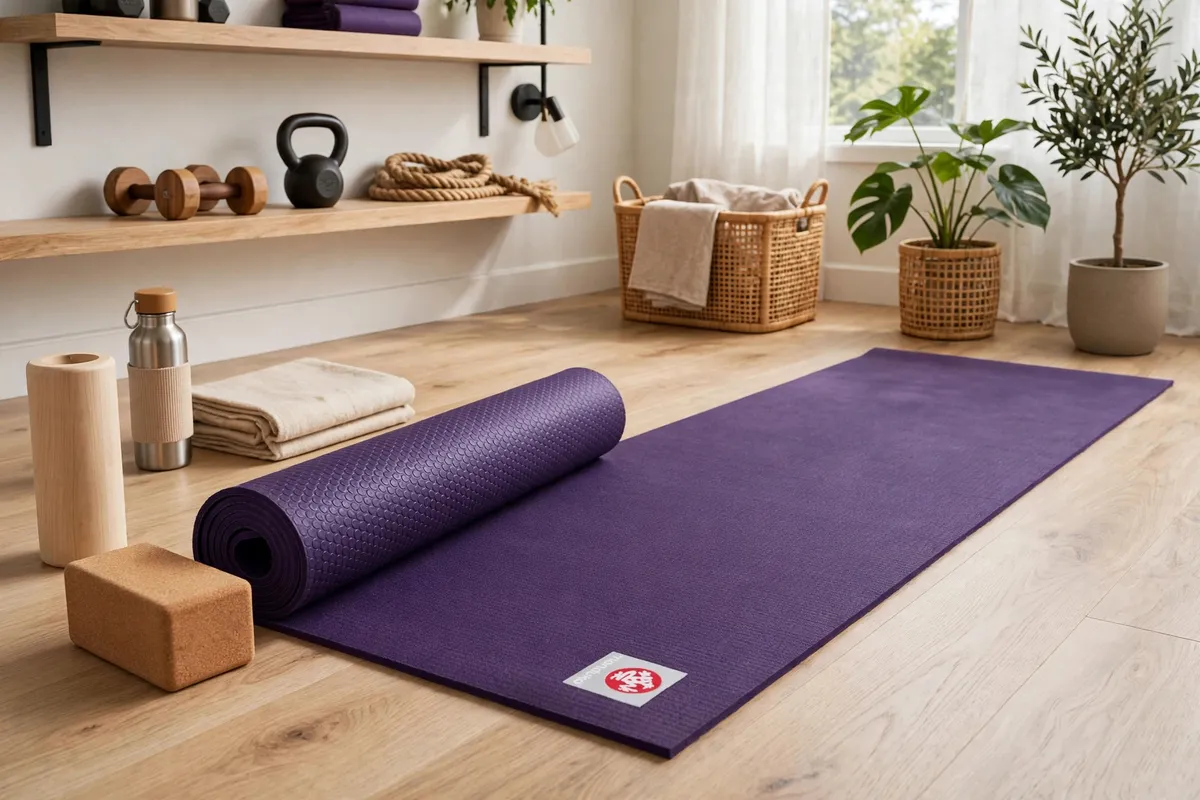
- 6mm dense cushioning
- Closed-cell surface resists moisture
- Designed to last for years of daily practice
What we like
- Exceptional joint cushioning
- Extremely durable surface
What to consider
- Heavy to carry to class
- Grip needs a break-in period
2. Lululemon The Mat 5mm
Best Grip
WHBUYS Score: 4.6 / 5
If your hands slip, this is the mat for you. The Mat 5mm has a smooth polyurethane top layer that grips harder the sweatier it gets, which is why it is a favourite for hot yoga and fast-paced flows — precisely the classes where other mats turn into slip-and-slides. At 5mm it still cushions knees comfortably without feeling spongy during standing balances. It is reversible too, with a different texture on the underside for gentler practices. The trade-offs are cosmetic and practical: it shows scuffs and marks more readily than a plain dark mat, and the grippy surface collects dust, so it benefits from a quick wipe after class. It sells for around $98.
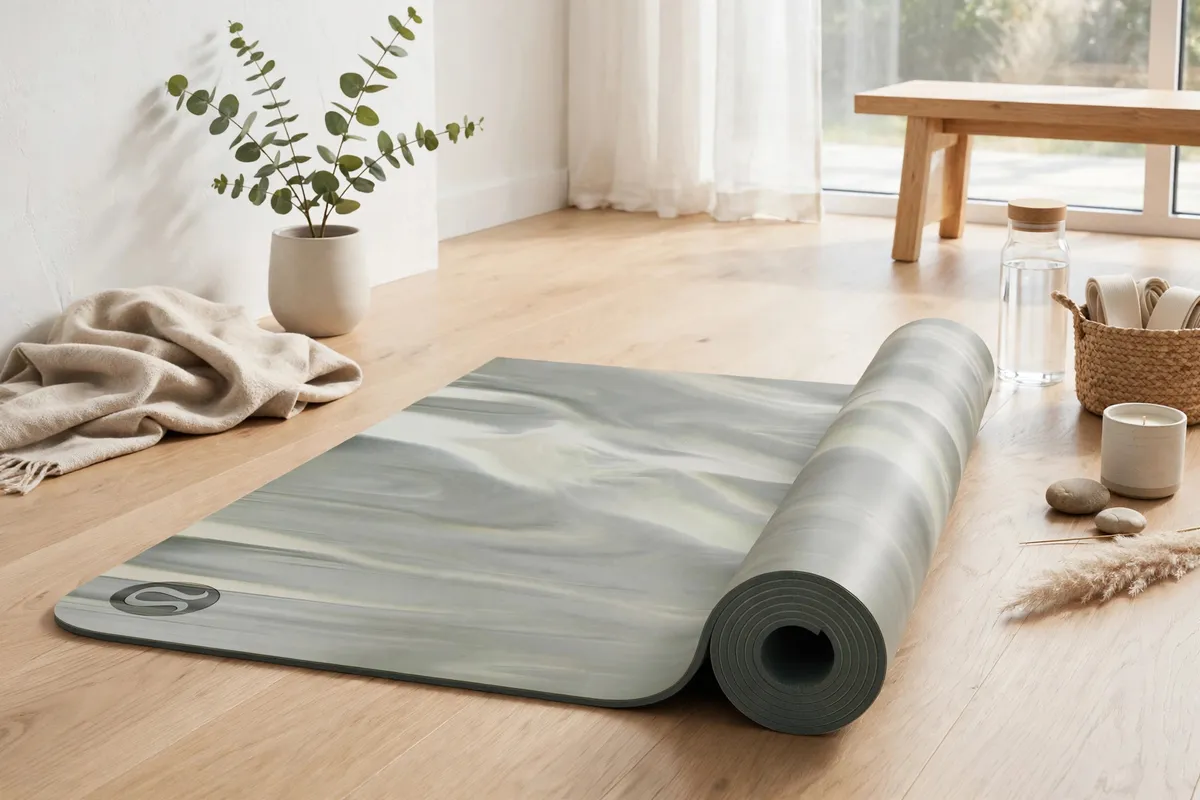
- Reversible, two-sided design
- 5mm cushioning
- Grip improves with sweat
What we like
- Outstanding grip in sweaty classes
- Balanced cushion without wobble
What to consider
- Surface marks and scuffs easily
- Needs a wipe-down after practice
3. Gaiam Premium
Best Budget
WHBUYS Score: 4.5 / 5
The Gaiam Premium shows that a first mat does not need to cost much to feel genuinely comfortable. At a full 6mm — a quarter of an inch — knees and elbows get real padding, and the lightly textured surface gives beginners reliable grip for standard flows. It is light enough to carry anywhere without a second thought, and it comes in a wide range of colours and prints if that helps you turn up to practice. It will not last as long as the top pick, and very sweaty hot-yoga sessions can overwhelm its grip, but at around $35 it is the right starting point for new practitioners — and a sensible spare mat for guests.
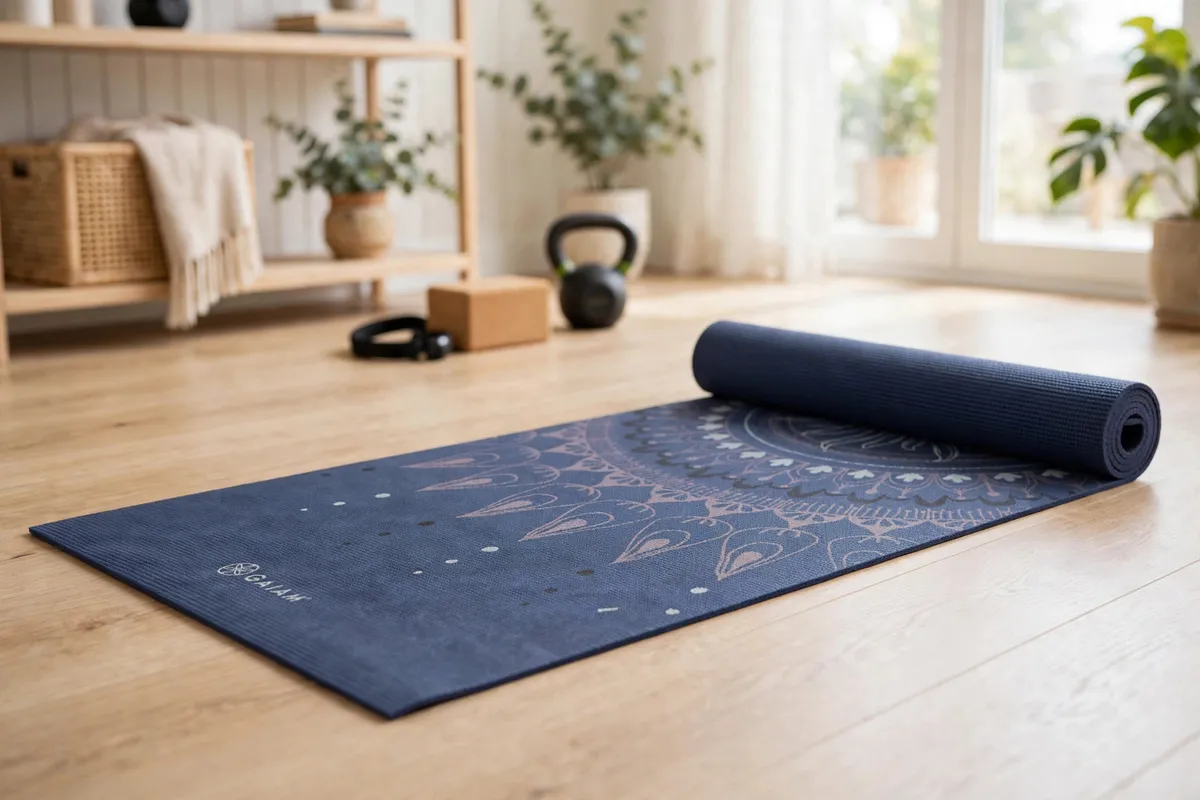
- 6mm (1/4-inch) thickness
- Lightweight and easy to carry
- Textured non-slip surface
What we like
- Real cushioning at a low price
- Very light and portable
What to consider
- Grip fades in very sweaty classes
- Shorter lifespan than premium mats
How to Choose a Yoga Mat
Start with thickness. A mat around 4 to 5mm gives you a middle ground — enough cushion without wobbling in standing poses — while 6mm is gentler on tender knees and suits floor-based work like yin or restorative yoga. Ultra-thin travel mats fold down tiny but leave joints with almost no padding, so keep one as a second mat for trips, not your only mat.
Next, consider grip and where you practise. If you take hot or sweaty classes, put a surface designed to grip when wet at the top of your list — that is the single biggest difference in a heated room. If you practise at home on carpet, almost any mat will do, and durability matters more than portability. Taller practitioners should also check the length: standard mats run about 68 inches, and longer options exist if your feet or head keep landing off the edge.
Frequently Asked Questions
How thick should a yoga mat be?
For most people, 4 to 6mm is the sweet spot. Thinner mats feel steadier for balance work, while thicker mats protect joints during floor poses. If you are buying just one, 5 or 6mm is the safest all-round choice — enough padding for knees, yet still stable enough to balance on.
How do I clean a yoga mat?
After practice, wipe the mat with a damp cloth and a drop of mild soap, or a dedicated mat spray, then leave it to dry flat or loosely rolled before you store it. Keep it out of strong direct sunlight for long stretches, which wears the surface down over time.
How long does a good yoga mat last?
Practised regularly, a good mat should give you several years before its surface turns smooth or starts flaking. Dense premium mats hold up longest; cheaper ones tend to need replacing sooner under daily use, above all when they are the only mat you own.
