Appliances
The 5 Best Espresso Machines of 2026
A good home espresso machine pays for itself in skipped café trips — but the category runs from one-button pod brewers to hands-on manual setups. We tested the leading machines for extraction quality, milk steaming, ease of use, and counter footprint to find five picks for every skill level and budget.
Let your morning routine decide. If you enjoy learning tamping and milk texturing, a manual machine rewards the effort with better shots over time; if mornings are rushed, a fully automatic or pod model puts a latte in your hand fastest. Each pick below is matched to how its owner actually lives day to day.
Our Top Picks
- Breville Barista Express Impress — Best Overall
- Breville Bambino Plus — Best Compact
- De'Longhi La Specialista Arte — Best Manual
- Philips 3200 LatteGo — Best Automatic
- Nespresso VertuoPlus — Best Pod Machine
At a Glance
| # | Product | Score | Price | Best for |
|---|---|---|---|---|
| 1 | Breville Barista Express Impress | 4.8 / 5 | $900 | — |
| 2 | Breville Bambino Plus | 4.7 / 5 | $500 | — |
| 3 | De'Longhi La Specialista Arte | 4.6 / 5 | $700 | — |
| 4 | Philips 3200 LatteGo | 4.6 / 5 | $800 | — |
| 5 | Nespresso VertuoPlus | 4.5 / 5 | $170 | — |
1. Breville Barista Express Impress
Best Overall
WHBUYS Score: 4.8 / 5
The Barista Express Impress takes the guesswork out of the fiddliest step in espresso: tamping. Its Impress Puck System doses, tamps with a consistent 10 kg of pressure, and trims the puck, so beginners get even extractions from day one while still learning real technique. The built-in conical burr grinder, 15-bar Italian pump, and manual steam wand cover the full café workflow, and the 67-ounce tank means fewer refills. It is a substantial machine that rewards counter space with genuine skill-building. At around $900 it is not cheap, but it replaces both a machine and a separate grinder purchase.
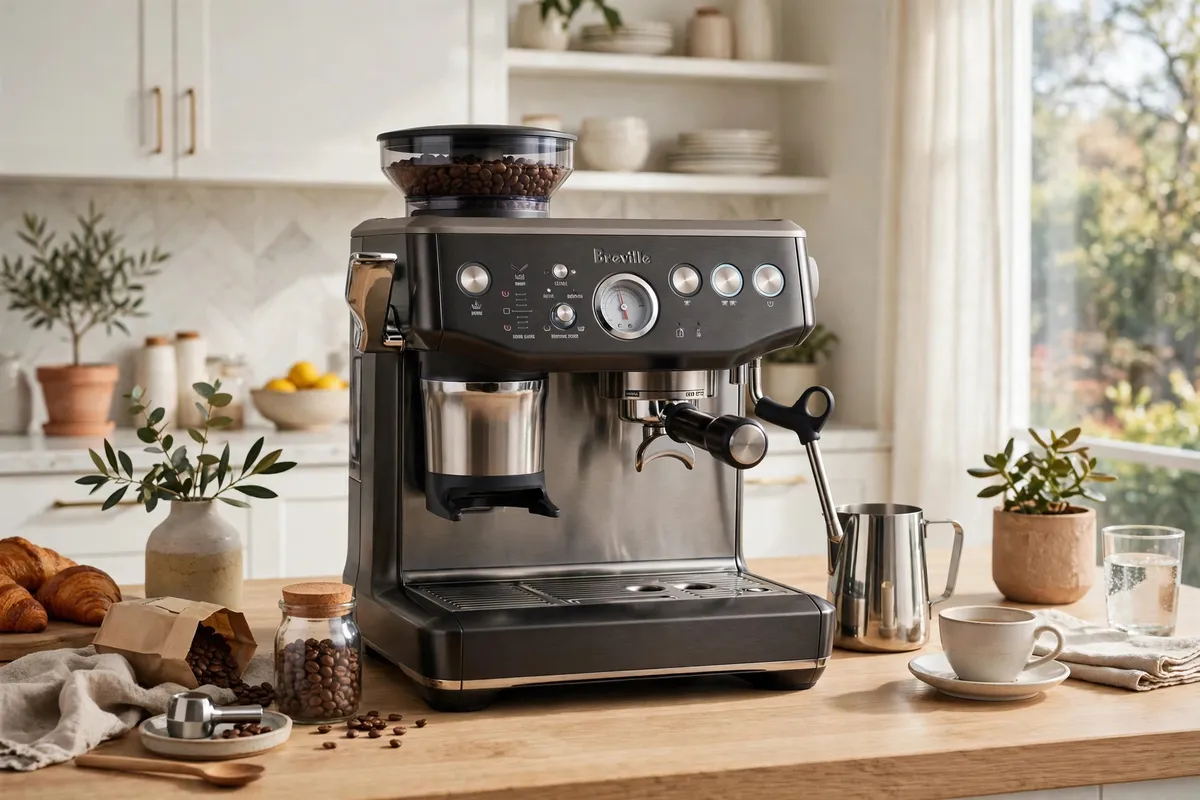
- Built-in conical burr grinder
- Impress Puck System assisted tamping
- 15-bar pump; 67 oz water tank
What we like
- Assisted tamping removes guesswork
- Grinder and machine in one body
What to consider
- Big footprint and price
- Steam wand is fully manual
2. Breville Bambino Plus
Best Compact
WHBUYS Score: 4.7 / 5
The Bambino Plus packs Breville's café know-how into one of the narrowest footprints in the category. Its ThermoJet heating system is ready in about three seconds, and the automatic steam wand textures milk to latte-art smoothness at three temperature and foam levels, then purges itself. A 15-bar pump, low-pressure pre-infusion, and a 64-ounce tank round out a spec sheet that embarrasses bigger machines. You will need a separate grinder — the honest trade for the size. For small kitchens that still want real espresso and proper cappuccinos, this is the one to beat at around $500.
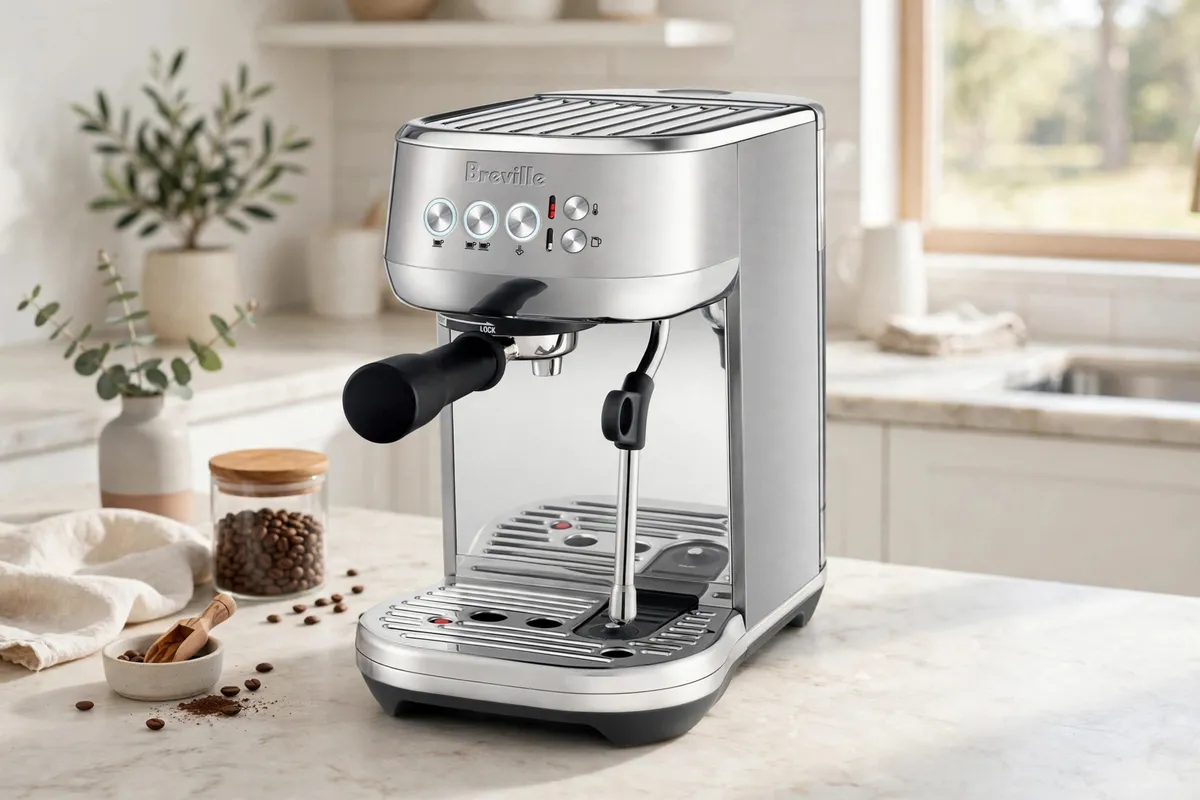
- ThermoJet 3-second heat-up
- Automatic microfoam steam wand
- 15-bar pump; 64 oz water tank
What we like
- Ready to brew in seconds
- Auto milk texturing that self-purges
What to consider
- No built-in grinder
- Small drip tray fills fast
3. De'Longhi La Specialista Arte
Best Manual
WHBUYS Score: 4.6 / 5
La Specialista Arte is built for people who enjoy the ritual. The integrated grinder offers eight grind settings with a funnel that keeps grounds in the portafilter, and the Smart Tamping Station presses with a lever so pressure stays even without wrist strain. Active Temperature Control holds water temperature steady through the shot, and the MyLatteArt wand produces the fine, glossy microfoam flat whites demand. It is a compact body for the class, with a 56-ounce tank and included accessories like a dosing funnel and tamper mat that make it feel complete out of the box. It sells for around $700 and suits committed home baristas.
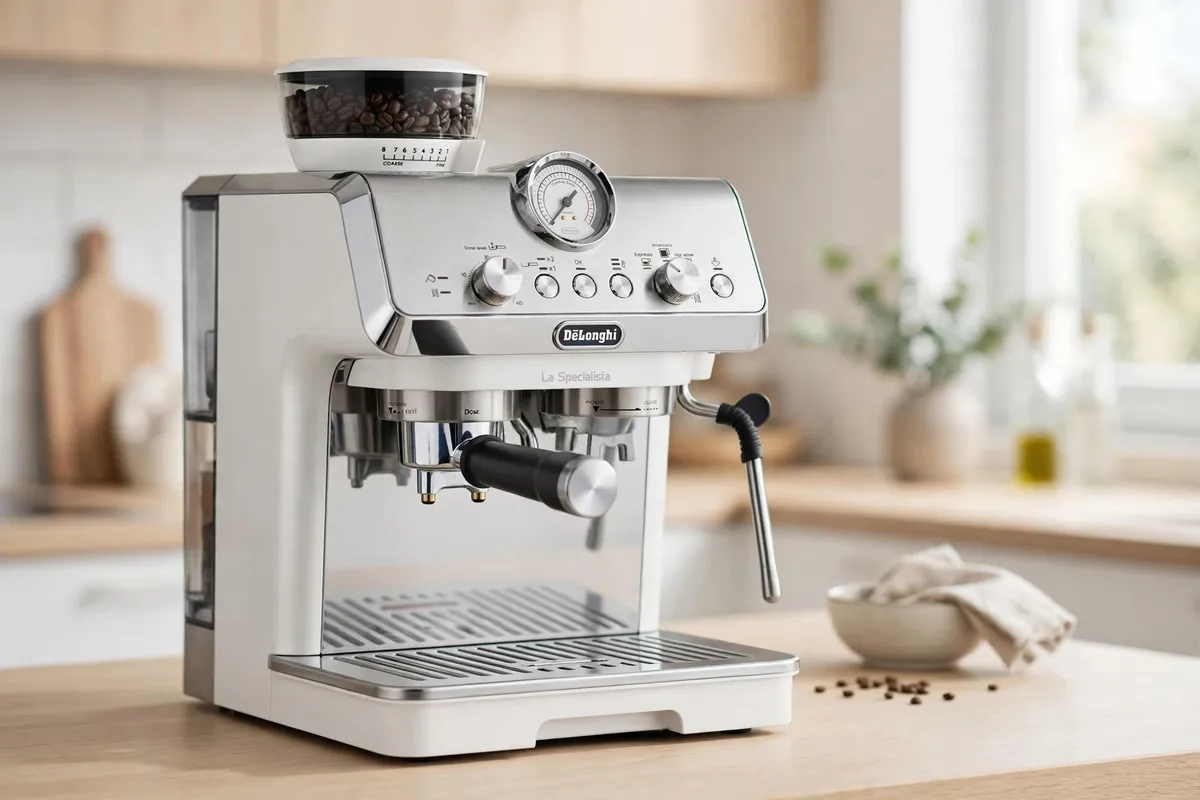
- Built-in grinder with 8 settings
- Smart Tamping Station lever
- MyLatteArt steam wand
What we like
- Lever tamping keeps pressure even
- Excellent milk wand for latte art
What to consider
- Manual workflow takes practice
- Grinder has only 8 settings
4. Philips 3200 LatteGo
Best Automatic
WHBUYS Score: 4.6 / 5
For a latte before you are fully awake, the 3200 LatteGo is the answer. Choose one of five drinks on the touch display and the machine grinds, extracts, and tops it with milk from the LatteGo carafe — a two-part, tube-free system that rinses clean and goes straight in the dishwasher. The ceramic grinder offers 12 settings and is rated for years of daily use, while the AquaClean filter stretches the time between descaling. Espresso purists will find less to tweak than on a manual machine, but consistency is the point here. Expect to pay around $800, less during frequent sales.
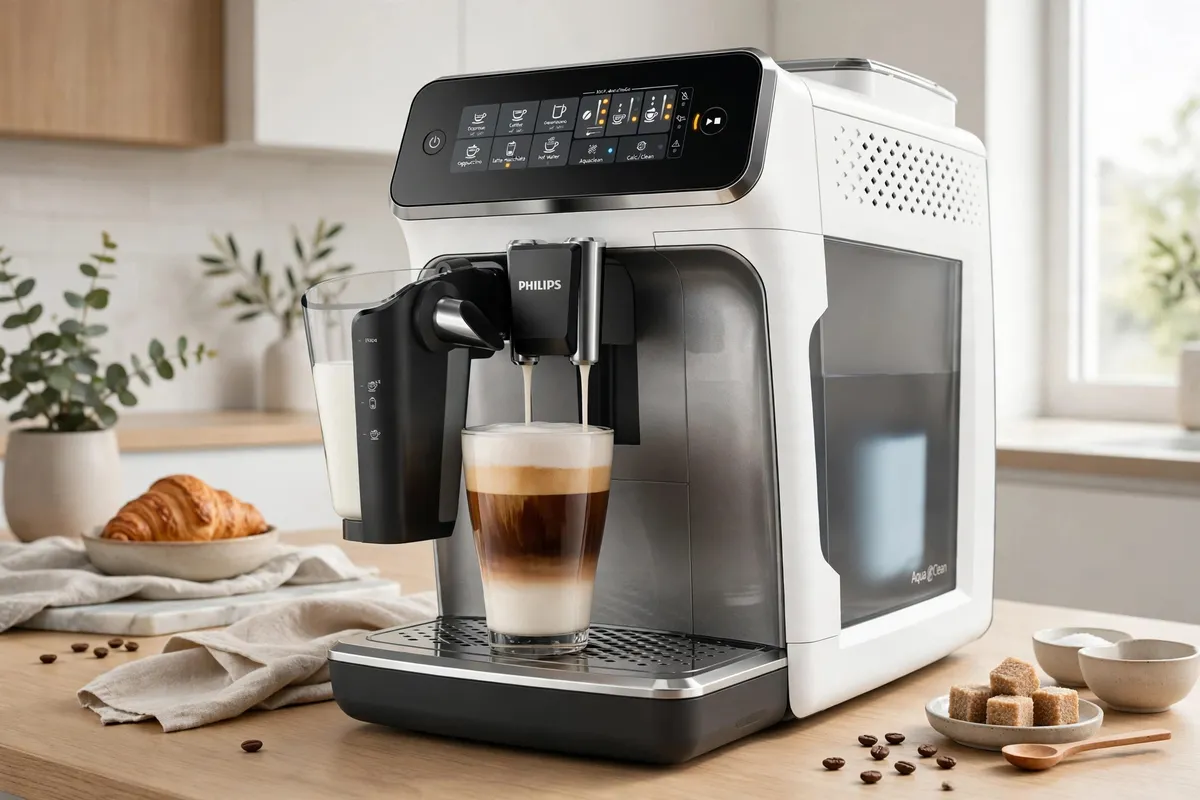
- Fully automatic; 5 one-touch drinks
- LatteGo milk system, dishwasher safe
- Ceramic grinder with 12 settings
What we like
- One-touch lattes, no tubes to clean
- Consistent results every morning
What to consider
- Less control over the shot
- Plastic-forward build
5. Nespresso VertuoPlus
Best Pod Machine
WHBUYS Score: 4.5 / 5
The VertuoPlus is espresso-adjacent convenience at its best. Drop in a Vertuo capsule, press one button, and the machine reads the capsule's barcode to set the pour, spinning it with Centrifusion extraction for a thick crema across five cup sizes — from a single espresso to a 14-ounce coffee. The 40-ounce tank and automatic capsule ejection keep the routine tidy, and an optional Aeroccino frother handles milk drinks. The trade-offs are real: you are locked into Nespresso's capsule ecosystem, and the cup is closer to strong coffee than a true café shot. At around $170 it is the easiest entry on this list.
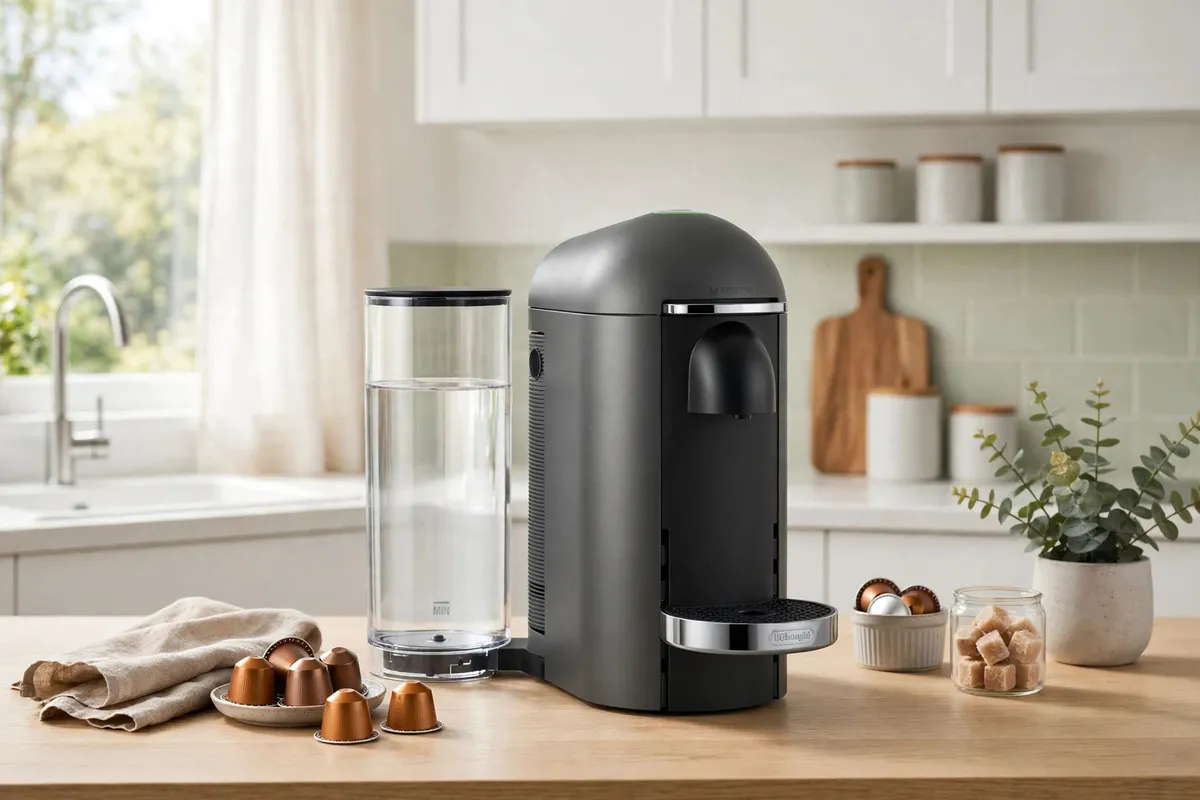
- Centrifusion barcode-reading extraction
- 5 cup sizes, espresso to 14 oz coffee
- 40 oz removable water tank
What we like
- One button, virtually no cleanup
- Five cup sizes from one machine
What to consider
- Locked into Vertuo capsules
- Not a true portafilter espresso
What to Look For in an Espresso Machine
Decide first how involved you want to be. Manual and semi-automatic machines hand you control over grind, dose, and tamping, and reward practice with better shots; fully automatic models trade that control for one-touch consistency, and pod machines trade it for pure convenience. Whatever the type, look for a pump rated at 15 bars and a portafilter or brew group that holds temperature steadily — heat stability shapes flavor as much as pressure does. Milk drinkers should weigh the steam wand: automatic texturing suits beginners, while a manual wand allows finer control. Finally, budget for the extras: most manual machines need a burr grinder, a scale, and regular descaling to stay at their best. Measure tank size and footprint before you buy.
Frequently Asked Questions
Do I need a grinder for a home espresso machine?
If the machine lacks a built-in grinder, yes. Espresso needs a fine, consistent grind that you adjust day to day, and a burr grinder is the single biggest upgrade for shot quality. Fully automatic and pod machines handle this step for you.
How often should I descale my machine?
Every two to three months for most households, or whenever the machine's indicator asks. Filtered water and cartridges like AquaClean can stretch that interval. Scale buildup slows heating and dulls flavor, so it is worth staying ahead of.
Does a 19-bar pump make better espresso than 15 bars?
No. Espresso extracts at about 9 bars at the puck; the pump rating is a maximum, not the brewing pressure. Pre-infusion, temperature stability, and grind quality matter far more to the taste in the cup than the headline bar number.